21 July 2023
Hungarian Grand Prix Preview - Hungaroring
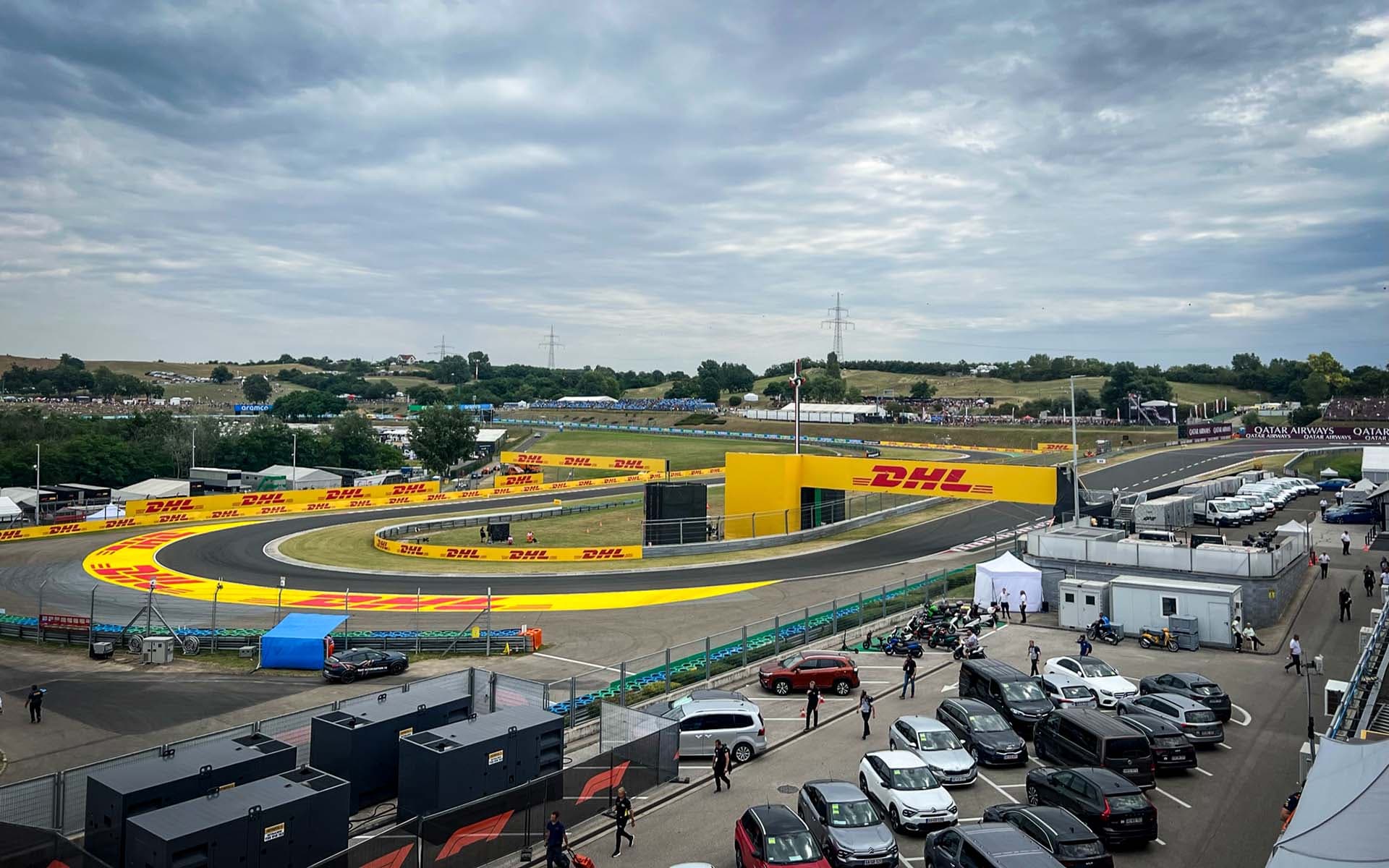
The Hungarian Grand Prix, held at the Hungaroring, a circuit located near Budapest, Hungary has been a fixture on the Formula 1 circuit since 1986 and is the second most consecutively used circuit behind Monza having appeared on the calendar ever since. It is renowned for its tight and twisty layout, the “Monaco without walls” which challenges both drivers and cars alike and has been known for producing surprise results, with several drivers winning their first-ever Grand Prix at the Hungaroring.
It is a 4.381km (2.722 mile) circuit with a total of 14 turns. The track has a relatively low average speed of around 190 km/h (118 mph), making it one of the slowest circuits on the Formula 1 calendar.
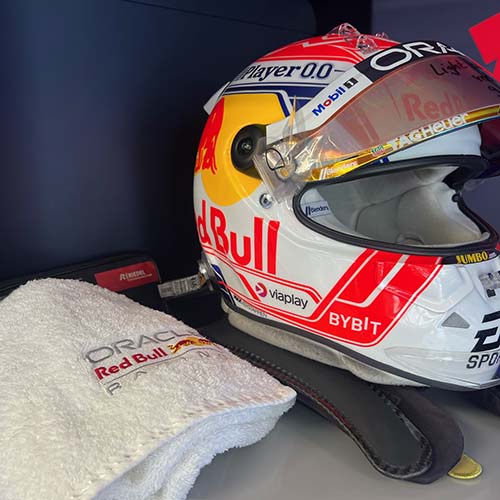
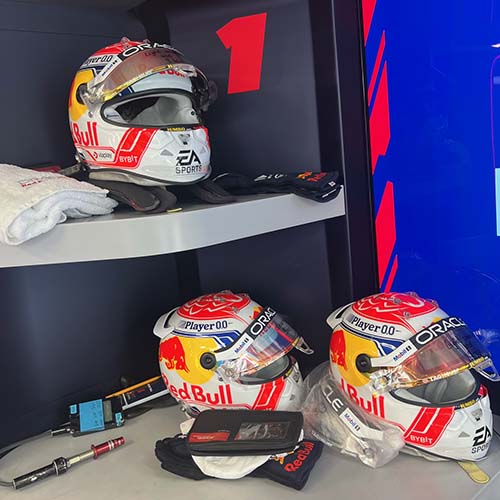
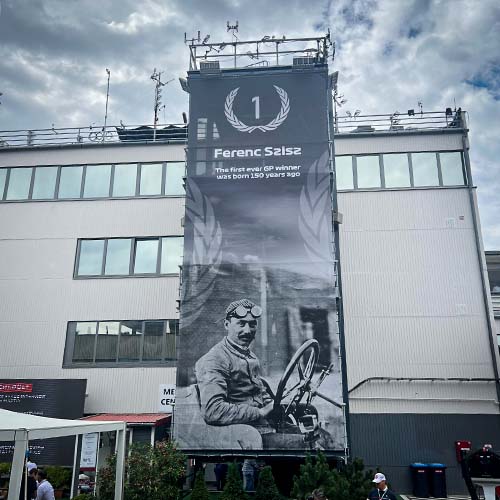
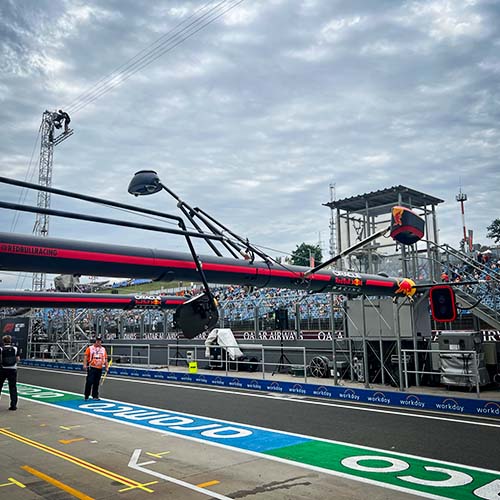
It features many slow and medium-speed corners and has a number of elevation changes, which can make it challenging for drivers to find the right racing line. The track is also quite bumpy in places, which can unsettle the cars, making it difficult for drivers to maintain their pace but also an important consideration for the load through a drivers low back and neck from the axial compression and vibrations.
Being held in late July also means temperatures can be quite high, but also the humidity in Hungary can be an issue. This can make the race physically demanding for drivers, who have to cope with high levels of heat and humidity inside the cockpit of their cars.
It isn’t the most physically demanding track on the calendar, however it still has a few corners above 4g of force to add to the hight temperature and bumpiness. Turn 4 generates around 4.5g, Turn 11 generates around 4.2g and Turn 12 generates around 4g (Lowe, 2021). The circuit is relatively easy win the braking force with Turn 12 being the highest at 4g for 2.1 seconds.
What can be most interesting is, similar to Monaco the Hungaroring is a mentally challenging circuit, with many corners that require precise and consistent driving. High concentration is needed and drivers need to get into a rhythm of the flowing left right turns. The track is also relatively short, which means that there is little time for drivers to recover if they make a mistake.
There have been several research papers published on the physical demands of the Hungaroring. A study by Kalcikova et al. (2018) found that the circuit generated high levels of g-forces, which put a strain on the drivers’ neck muscles. The study also found that the circuit’s tight and twisty layout made it physically demanding for drivers, who had to make frequent and rapid changes of direction. Bortoli et al. (2019) also found that the Hungaroring was a mentally challenging circuit, with many corners requiring precise and consistent driving. The study also found that the circuit’s short lap length could cause drivers to experience mental fatigue and stress.
This marries up with the drivers views on the circuit; Sebastian Vettel has described the circuit as “very demanding physically and mentally” (Noble, 2019), while Fernando Alonso (Noble, 2021) and Max Verstappen (Benson, 2021) has praised the track’s “technical” nature and Lewis Hamilton has described the circuit as “a bit like a go-kart track”. Lets see what the weekend brings!
SIGN UP To Elite Formula Physio & Training
Welcome to Elite Formula Physio & Training, where you can experience exclusive, personalized coaching in performance and physiotherapy-typically reserved for professional athletes. Our team, led by Bradley Scanes, a renowned Human Performance Consultant at Red Bull Racing & Red Bull Technology, brings a wealth of expertise to ensure the utmost care for our clients.
Meet the experts behind our success: Matt Murray-Downing, a Formula 2 Physiotherapist and Performance Coach, and Grace Covington, a seasoned Physiotherapist for the England Women’s Rugby Team. Both specialists contribute their unique knowledge and experience to our approach.
At Elite Formula PT, we are committed to tailoring programs that address the specific needs and aspirations of each individual. Whether you seek to improve athletic performance or recover from an injury, our team possesses the necessary expertise to guide you towards success. Join us and unlock your full potential!